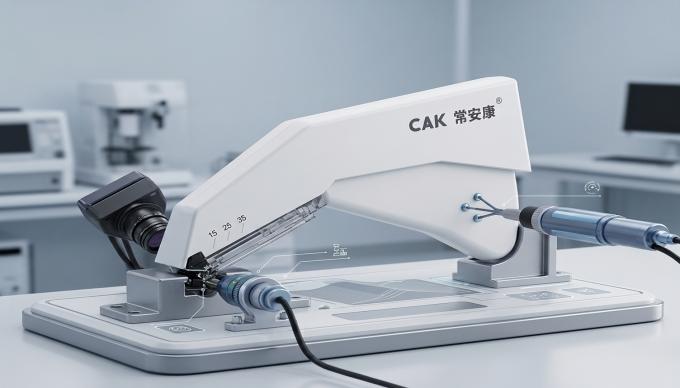
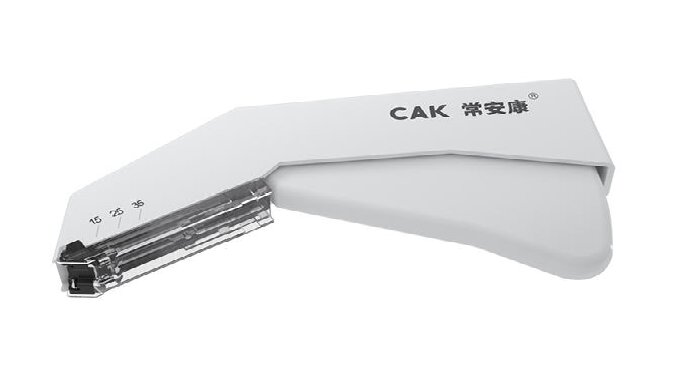
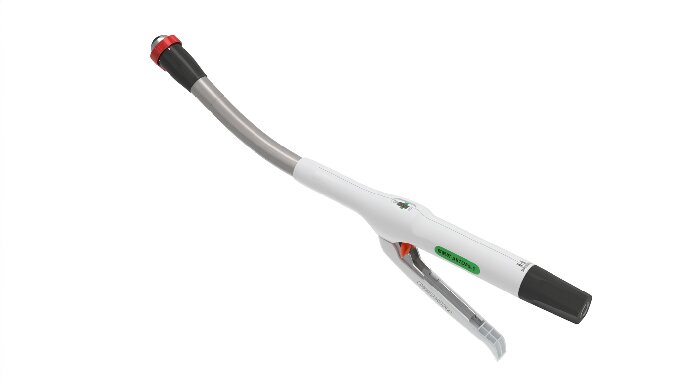
The endoscopic cutting stapler is a specialized surgical device used in minimally invasive procedures, such as laparoscopic or thoracoscopic surgeries.
CAK Medical's surgical stapler for sale allows surgeons to perform tissue anastomosis, transections, or resections with precision through small incisions or natural body openings.
The device features a cutting blade that precisely transects tissue or vessels between two rows of staples, allowing for clean and controlled resection.
It deploys multiple rows (typically two or three on each side of the cut) of metal staples to securely close the divided tissue edges, ensuring hemostasis and preventing leaks.
The staples compress tissue, sealing blood vessels to minimize bleeding during and after the procedure.
Equipped with reloadable cartridges, it accommodates various tissue thicknesses and types by allowing surgeons to select appropriate staple sizes.
Designed to work through small incisions with endoscopic guidance (e.g., via a laparoscope), it operates in confined spaces with enhanced visualization.

Minimally Invasive Design
Endoscopic staplers are specifically designed for minimally invasive surgeries, allowing procedures to be performed through small incisions or natural body openings. This design reduces the need for large surgical cuts, minimizing trauma to surrounding tissues, decreasing blood loss, and leading to faster recovery times compared to traditional open surgery.
Precision and Control
Endoscopic staplers offer high precision, allowing surgeons to staple tissues with exact control. Many models come with adjustable stapling mechanisms and firing options, enabling tailored staple placement for various tissue thicknesses. This ensures secure anastomosis or resection, which is crucial for reducing complications like leakage, poor wound healing, or bleeding.
Ergonomically Designed Handles
The handles of endoscopic staplers are ergonomically designed for ease of use during laparoscopic or endoscopic procedures. These handles typically feature a trigger mechanism that helps surgeons maintain a steady grip and execute accurate stapling, even in confined or difficult-to-reach areas. This reduces fatigue and improves the overall efficiency and safety of surgeries.
Small incisions are made to insert trocars (ports) into the body. An endoscope (e.g., laparoscope) is introduced to provide visualization, and the stapler is inserted through a trocar.
Under endoscopic guidance, the surgeon positions the stapler's jaws around the target tissue or organ (e.g., intestine, stomach, or lung tissue).

Email us
Call us
Address
No.17 Jinfeng Road, Changzhou West Taihu Lake Science and Technology Zone, Changzhou, Jiangsu
 English
 français
 Español
 русский
 Deutsch
 italiano
 português
 العربية
 tiếng việt
 Türkçe