Changzhou Ankang Medical Instruments Co., Ltd.

Endoscopes are medical instruments used for visualizing the internal structures of the body. They consist of a flexible or rigid tube with a light source and a camera at the tip, allowing doctors to view areas such as the airways, ureters and kidneys, bladder and urethra. Endoscopes can be used for diagnostic procedures, as well as minimally invasive surgeries. They provide real-time images on a monitor, enabling precise examination and treatment without the need for large incisions. Endoscopes are essential tools in diagnostic imaging, biopsy collection, and surgical interventions.

Endoscopy Medical Devices and Accessories

  • Bronchoscope

    A bronchoscope is an endoscope used to examine and treat the trachea and bronchi. The doctor inserts the endoscope through the mouth and nose into the trachea and bronchi at all levels. The front camera transmits real-time images of the airway to the display screen.
  • Ureteroscope

    A ureteroscope is a slender endoscope used to examine and treat the upper urinary tract (ureter, renal pelvis). The doctor gently inserts it into the ureter through the urethra and the natural cavity of the bladder to reach the kidney. The camera system at the front of the endoscope transmits high-definition images of the inside of the ureter and renal pelvis to the external display in real time.
  • Cystoscope

    A cystoscope is an endoscope used to examine and treat the bladder and urethra. The doctor gently inserts it into the bladder through the natural cavity of the urethra. The camera system at the front of the endoscope transmits high-definition images of the inside of the bladder and urethra to the display screen in real time.
  • Ultrasonic Scalpels

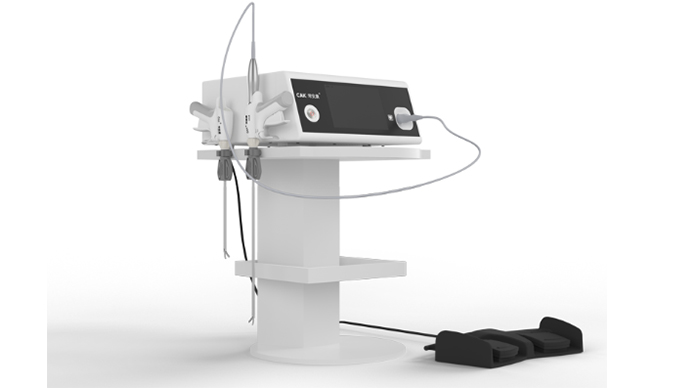
    The ultrasonic scalpel is a new surgical instrument with both coagulation and dissecting functions, widely used in various open and minimally invasive surgeries. Its principle involves converting electrical energy into mechanical energy through an ultrasonic hand piece, driving the surgical blade to produce mechanical oscillations at an ultrasonic frequency of 55.5kHz. This causes tissue vibration, leading to vaporization of tissue water, breaking and recombination of protein chains, coagulation, and dissecting of tissue, achieving reliable hemostasis.

Why Surgeons Trust Our Endoscopy Devices and Accessories

Exceptional Quality and Precision

CAK endoscopes, including bronchoscopes, ureteroscopes, and cystoscopes, are engineered with advanced optical technology. They provide clear, high-definition visuals for accurate diagnosis and effective treatment.

01
Minimal Invasiveness and Durability

Designed for minimal invasiveness, CAK endoscopes offer flexibility and durability. This allows healthcare professionals to perform a wide range of procedures with confidence and ease.

02
Ergonomic Design and Patient Safety

CAK endoscopes feature ergonomic designs for easy maneuverability and are compatible with sterilization processes. This ensures patient safety and efficiency in every procedure.

03

Applications of Endoscopy Devices and Accessories

Applications of Endoscopy Devices and Accessories
01
Minimally Invasive Surgery

Endoscopes allow for minimally invasive surgery, Bronchoscopes are used to examine the airways and lungs, ureteroscopes are used for the urinary tract, and cystoscopes are used for the bladder and urethra. Providing visualization of internal structures with real-time imaging, which leads to quicker recovery times, reduced complications, and more accurate diagnoses.

Knowledge about Endoscopy Devices and Accessories

  • What types of procedures can these endoscopes be used for?

    Bronchoscope: Used in bronchoscopy for diagnosing lung diseases, obtaining lung biopsies, and removing obstructions or foreign bodies in the airway.


    Ureteroscope: Primarily used for ureteroscopy to treat kidney stones, blockages, tumors, and perform biopsy or laser treatments.


    Cystoscope: Used for cystoscopy to examine the bladder and urethra, remove stones, take biopsies, and treat conditions like strictures or bladder tumors.


  • What are the benefits of using endoscopes in surgeries?

    Minimally invasive: No large incisions are required, reducing recovery time and postoperative pain.


    Faster recovery: Patients generally recover quicker due to less tissue trauma.


    Real-time imaging: Provides clear visual access to hard-to-reach areas, aiding accurate diagnosis and treatment.


    Lower risk of complications: Reduced blood loss, smaller incisions, and shorter hospital stays.


  • Are these procedures covered by insurance?

    Yes, bronchoscopy, ureteroscopy, and cystoscopy are standard medical procedures, and most health insurance plans cover these procedures, especially when performed for diagnostic or medically necessary reasons. Always check with your insurance provider for specific coverage details.

Request Samples or a Custom Quote Today
Experience CAK Excellence of Minimally Invasive Surgical Instruments
Get CAK instruments with CFDA/CE certification tailored to your surgical needs – our experts respond within 24 hours.
Contact Us
Request a Free Quote