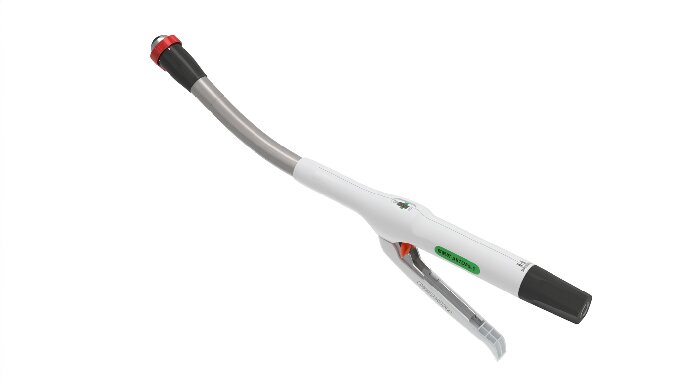
An endoscope is a slender, flexible or rigid instrument equipped with a light source and a miniature camera. Doctors introduce it into the body through natural cavities or tiny incisions in the human body. Its lens can transmit real-time images of internal organs (such as the digestive tract, respiratory tract, and abdominal cavity) to an external display for direct observation.
Endoscope provides an intuitive and clear view of the body, greatly assisting doctors in diagnosing diseases, and can perform a variety of minimally invasive treatments under direct vision.


The image is clear, the display screen has adjustable multi-resolution, and image processing and USB video transmission can be performed freely.
Disposable saves time, is easy to use, and can be thrown away immediately after use, without the need for disinfection.
A variety of specifications meet clinical needs, with three-dimensional deflection, larger circular turning and load bending capabilities.

CAK has three types of disposable endoscopes, namely bronchoscopes, cystoscopes, and ureteroscopes. Bronchoscopes are commonly used in respiratory departments, ICUs, etc., while ureteroscopes and cystoscopes are commonly used in urology.
Disposable endoscopes can avoid cross infection and save disinfection processes; they are ready to use and can be thrown away at any time, suitable for a variety of scenarios.
The bronchoscope and ureteroscope have 160,000 pixels, and the cystoscope has 1 million pixels. With dual LED fill light, the imaging is clear and meets various clinical surgical needs.
The bronchoscope has a bidirectional 220° bend, the ureteroscope has a bidirectional 285° bend, and the cystoscope has a bidirectional 210° bend. The controllable damping and ergonomic design help achieve precise bending and can be controlled at will.

Email us
Call us
Address
No.17 Jinfeng Road, Changzhou West Taihu Lake Science and Technology Zone, Changzhou, Jiangsu
 English
 français
 Español
 русский
 Deutsch
 italiano
 português
 العربية
 tiếng việt
 Türkçe